
Neurofibromatosis
WHAT IS NF
Neurofibromatosis (pronounced nyoo-roh-fai-broh-muh-toh-suhs) (NF) is a rare genetic disorder that affects the nervous system, causing tumors to develop on nerve tissue. NF is a group of genetic disorders that affect the nervous system, causing the growth of tumors on nerves and various other complications. There are three main types of neurofibromatosis:
NF1, NF2 and Schwannomatosis .
Each type is characterized by specific symptoms and genetic mutations. Diagnosis of neurofibromatosis involves a combination of clinical evaluation, imaging studies (such as MRI), and genetic testing. Management often requires a multidisciplinary approach involving neurologists, geneticists, ophthalmologists, and other specialists. Treatment options focus on managing symptoms and complications, with surgical intervention for tumor removal in some cases. Regular monitoring is crucial to detect and address potential complications early.
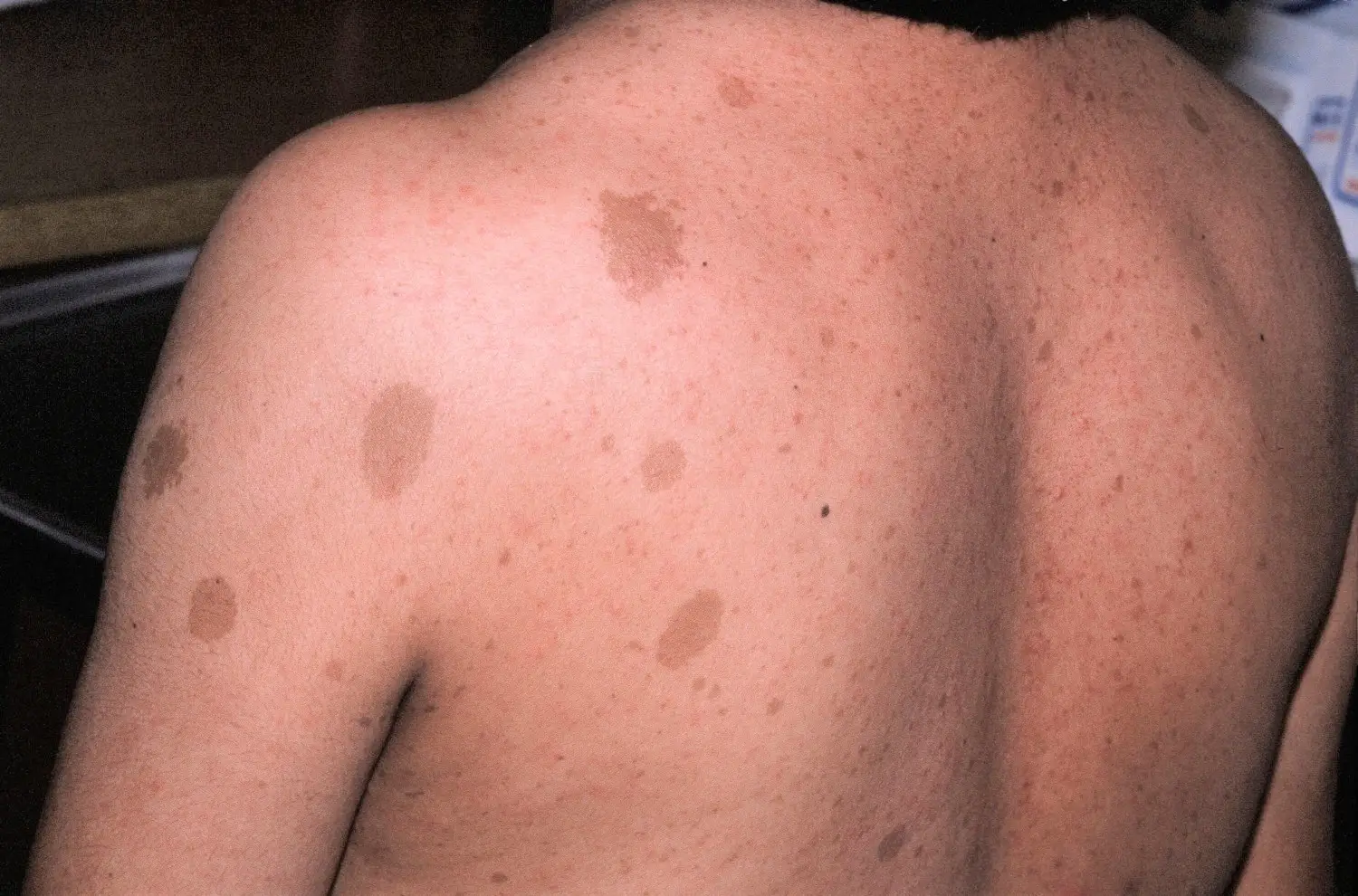
Light brown spots on skin :
Most common symptom of NF
Neurofibromatosis Type - 1 (NF - 1)
It is caused by mutations in the NF1 gene, located on chromosome 17. This gene produces a protein called neurofibromin, which plays a crucial role in regulating cell division.
Individuals with NF1 often develop neurofibromas, which are noncancerous tumors that grow on nerves. These tumors can appear on or under the skin, and in some cases, internally. Café-au-lait spots (light brown skin patches) are another common characteristic of NF1.
NF1 can lead to various complications, including learning disabilities, vision problems, skeletal abnormalities, and an increased risk of certain cancers.

Neurofibromatosis Type - 2 (NF - 2)
It is less common than NF1 and is associated with mutations in the NF2 gene, located on chromosome 22. This gene encodes a protein known as merlin, which helps control cell growth.
NF2 is characterized by the development of tumors, primarily vestibular schwannomas (tumors of the vestibular nerve affecting balance and hearing). Individuals with NF2 may also develop other nervous system tumors, such as meningiomas and ependymomas.
Hearing loss is a common complication of NF2 due to the involvement of the vestibular nerve. Other complications may include balance issues, vision problems, and neurological deficits.

Schwannomatosis
Schwannomatosis (pronounced shwa-noma-tosis), is the rarest form of neurofibromatosis. It is associated with mutations in the SMARCB1 and LZTR1 genes. Unlike NF1 and NF2, schwannomatosis does not involve vestibular schwannomas.
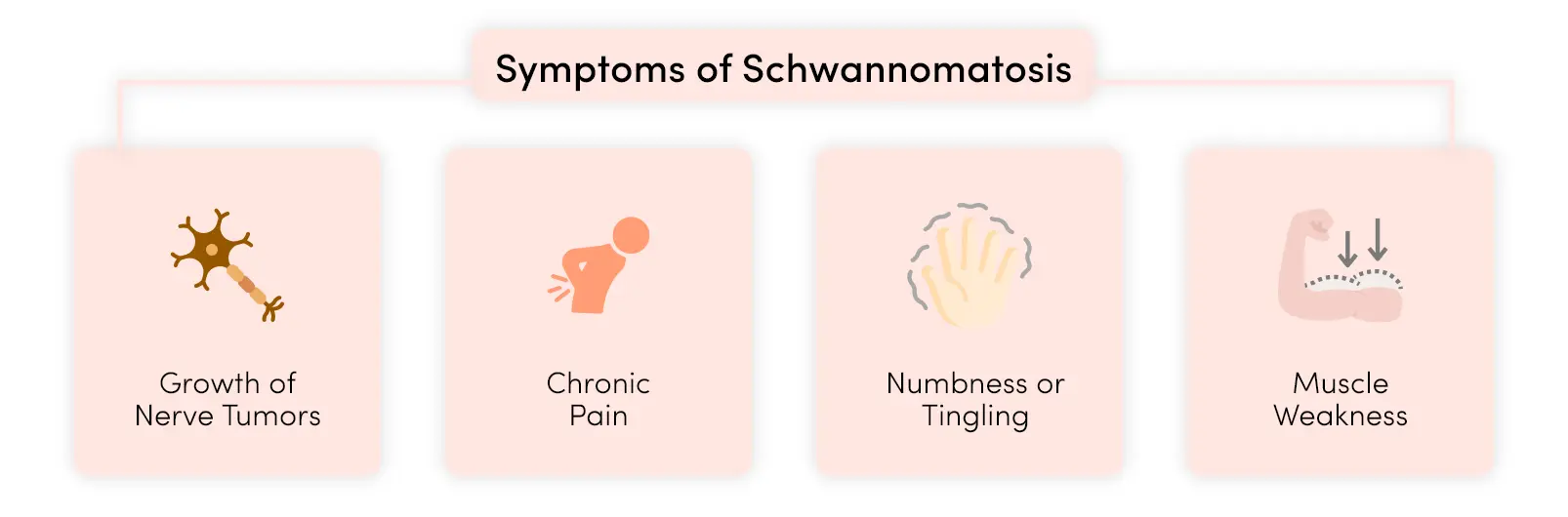
Individuals with schwannomatosis develop schwannomas, which are tumors that arise from Schwann cells. These tumors typically affect peripheral nerves, causing pain and neurological symptoms.
Chronic pain is the primary complication of schwannomatosis, but it generally does not lead to hearing loss or other sensory impairments seen in NF1 and NF2.
Right and Wrong about NF
Right
- Neurofibromatosis is a genetic disorder that is often inherited from a parent who carries the gene
- There are two primary types of neurofibromatosis: Type 1 (NF1) and Type 2 (NF2), each with distinct symptoms and complications.
- NF1 is characterized by the growth of benign tumors called neurofibromas along nerves in the skin, brain, and other parts of the body.
- Light brown skin patches, are a common sign of NF1.
- NF2 often leads to hearing loss due to the development of benign tumors on the auditory nerves.
- The severity and range of symptoms can vary widely among individuals with neurofibromatosis.
Wrong
- Neurofibromatosis tumors are always malignant and life-threatening.
- Neurofibromatosis affects only the skin and has no other systemic effects.
- Symptoms of neurofibromatosis always appear in childhood and never later in life.
- Neurofibromatosis cannot occur spontaneously and is only passed down genetically.
- Neurofibromatosis can be completely cured with medication.
- All individuals with neurofibromatosis have intellectual disabilities
Comparison between types of NF
| Features | NF Type - 1 | NF Type - 2 | Schwannomatosis |
|---|---|---|---|
|
Chromosome Affected |
Chromosome 17 |
Chromosome 22 |
Chromosome 22 |
|
Gene
Involved |
NF-1 gene |
NF2 gene
(merlin/schwannomin) |
SMARCB1 or LZTR1
genes |
|
Main Symptoms |
Multiple light brown
spots, neurofibromas,
Lisch nodules,
bone deformities,
learning disabilities |
Bilateral vestibular
schwannomas, hearing
loss, tinnitus, balance
issues, meningiomas,
ependymomas |
Schwannomas
(usually painful),
chronic pain,
numbness, muscle
weakness |
|
Age of Onset |
Childhood |
Adolescence to early
adulthood |
Adulthood |
|
Rarity |
1 in 3,000 |
1 in 25,000 |
1 in 40,000 |
|
Effects on
Body |
Skin changes, skeletal
abnormalities, optic
pathway gliomas,
increased cancer risk |
Hearing loss, vision loss,
balance issues, potential
facial nerve damage |
Pain and neurological
issues primarily
affecting limbs |
|
Inheritance
Pattern |
Autosomal dominant |
Autosomal dominant |
Often sporadic, can
be autosomal
dominant |
|
Diagnosis |
Clinical criteria, genetic
testing |
MRI, genetic testing |
MRI, genetic testing |